Why keep a journal at all
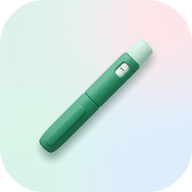
GLP-1 and GIP/GLP-1 medicines are used on a regular schedule: some once a week, others once a day. But memory doesn’t cope well with a rhythm like that. After a few weeks the days blur together and “when was it, exactly?” has no clear answer.
Even the patient leaflets expect you to write things down. For example, the leaflet for a once-weekly semaglutide medicine recommends noting the chosen weekday on the carton and writing the date on it every time you inject, to help you remember to inject only once a week.1
A journal simply takes that idea further: alongside the dates of your doses, you can also see what happened in between.
What to record
Injection day and time
Write down the date and time of each dose, and the medicine exactly as it appears on your prescription. The leaflets for once-weekly medicines say they should be used on the same day each week if possible, and describe when the injection day can be changed.12
Record missed or late doses too. What to do next is described in the patient leaflet and decided by your doctor – the journal is only there to put it in black and white.
Injection site
Note the injection site with every dose. The leaflets for some medicines explicitly say to change the injection site.2 The guide Injection site rotation explains how.
How you feel
Record feelings and symptoms as you go, ideally as soon as you notice them. Some symptoms are hard to describe afterward, so it helps to write them down during your daily activities.4 Note when a symptom started, how strong it was and what made it better or worse.3
Food and drink
Food notes don’t need to be perfect. A rough record is enough: what, when and roughly how much. Drinks deserve special attention. Patient leaflets warn that digestive side effects such as nausea, vomiting or diarrhea can lead to a loss of fluids, and that it is important to drink plenty of fluids.2 More in the guide Protein and hydration.
Measurements and weight, only if you want
Measurements are optional. If numbers aren’t good for you, don’t record them – the journal is there for you, not the other way around. In Dávka you can hide the values completely.
Questions for your doctor
Thought of a question mid-week? Write it down right away. Before a visit, it’s worth writing down your two or three most important questions.3 The guide Preparing for a doctor visit covers what else to prepare.
How to stick with it
- Log it right away. A few words in the moment beat a detailed entry written that evening.
- Keep it short. A date, a time and one word often say more than a long paragraph.
- Set reminders. For your injection day and perhaps a short look back at the end of the day.
- A missed day doesn’t ruin anything. Just pick it up again tomorrow.
What a journal can’t do
A journal is your memory, not your doctor. It can’t tell you whether your symptoms are fine, and it won’t advise you on your dose. When you’re unsure, ask your doctor or pharmacist – which is exactly what every patient leaflet encourages.1
As a patient, you have the right to report suspected side effects of medicines directly to your national medicines authority, as well as to your doctor or pharmacist.5
In an emergency, call your local emergency number. 112 works across the European Union; in the Czech Republic, 155 is the emergency medical service.6
Sources
- European Medicines Agency (EMA): product information for a once-weekly semaglutide medicine, package leaflet (PDF, accessed October 16, 2026). ema.europa.eu
- EMA: product information for a tirzepatide medicine, package leaflet and instructions for use (PDF, accessed October 16, 2026). ema.europa.eu
- NHS: What to ask your doctor or other healthcare professional (accessed October 16, 2026). nhs.uk
- HealthLink BC: Diary of Symptoms (accessed October 16, 2026). healthlinkbc.ca
- European Medicines Agency: Patients and consumers (accessed October 16, 2026). ema.europa.eu
- Czech public administration portal: Emergency calls, in Czech (accessed October 16, 2026). portal.gov.cz